2017 – Support provided to Butoke by the Friends of Butoke Charity

In 2017 the Charity’s income was just under £24k. A big ‘thank you’ to everyone whose generosity contributed to that total.

During 2017 we sent just under £26k to Butoke (we had a small surplus at the end of 2016). The majority of that went towards the running costs of the orphanage run by Butoke. However we also sent £2400 towards the cost of new equipment for Butoke’s school.

In 2016 The Friends of Butoke Charity raised over £16,000 . We sent £14,600 to help with the running costs of Butoke’s orphanage. Butoke particularly depends on the Friends of Butoke Charity in the UK and a similar US organisation raising funds for the orphanage because the large aid organisations which have provided funds for other projects run will not fund it. As well as helping with the costs of the orphanage, with your help we raised roughly £2000 to pay for the installation of solar panels to provide electricity for the Clinic run by Butoke. However at the moment the situation in the DRC is too unstable for the installation to take place.

This week is World Water Week #WWWeek

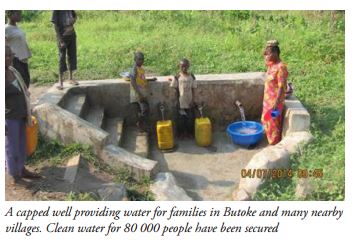
In 2014 Butoke capped 6 springs which now provide access to clean drinking water for around 80,000 people. The Friends of Butoke is very grateful to the clean drinking water project funded by The Kitchen Table Charities Trust who provided The Friends of Butoke with a grant of £10,000 to make this possible.

Capping a spring ensures clean drinking water by preventing the water source being contaminated by animal and human waste. The health benefits are huge: child mortality in the population served by springs previously capped by Butoke has fallen very substantially (by about one third) because there has been a large reduction in the number of cases of diarrhoea. In addition, the local population generally drink insufficient water because of the difficulty in obtaining it and the fear of diarrhoea. Higher clean water consumption has resulted in improved health, for example, fewer kidney infections. Access to clean water is essential